
A profitable business can still run short of cash on a Friday afternoon. A large customer may be 60 days from paying an invoice, wages and supplier accounts may be due now, and a vehicle or piece of equipment may need replacing before it causes downtime. The commercial loan versus business overdraft decision is not simply about which facility is easier to obtain. It is about matching the finance structure to the reason you need funds, the timing of repayment and the security you can offer.
For Australian business owners, especially those who are self-employed, use non-standard income or have had a credit event, the right structure can make a material difference to affordability and lender assessment. A facility that looks flexible can become expensive if used for a long-term purchase. Conversely, a term loan can create unnecessary repayments if the need is only temporary.
What is a commercial loan?
A commercial loan provides a defined amount of money that is advanced for an agreed business purpose. You then repay the balance, plus interest and applicable fees, over a set term. Depending on the lender and purpose, repayments may be principal and interest, interest-only for a period, or structured around the expected cash flow of the business.
Commercial loans are commonly used to buy commercial property, refinance existing business debt, purchase stock, fund a fit-out, acquire another business or release equity for a defined growth opportunity. Larger transactions may be secured by commercial property, residential property or other acceptable assets. Some loans are supported by a director’s guarantee.
The key feature is certainty. The amount, term and repayment framework are agreed at the start. That makes a commercial loan more suitable where the benefit of the expenditure will be received over years, not weeks. For example, funding a warehouse purchase over an overdraft could leave the business carrying costly short-term debt with no clear repayment path. A properly structured commercial property loan is generally a more sensible fit.
How lenders assess commercial loans
Lenders want to see how the debt will be serviced and what supports the facility if circumstances change. Financial statements, BAS statements, tax returns, bank statements, lease income, contracts and asset details may all be relevant. The documents required depend on the lender, loan size and security.
A straightforward full-document application is not the only pathway. Many business owners legitimately have income that does not present neatly in a PAYG payslip or in the latest tax return. Alternative-documentation commercial lending may use BAS statements, accountant-prepared information or business bank statements, subject to lender criteria. Credit impairment, a low credit score or an older adverse event does not automatically rule out a commercial loan, although it may affect the lender options, rate, loan-to-value ratio and supporting evidence required.
What is a business overdraft?
A business overdraft is a pre-approved credit limit attached to a business transaction account. The business can draw on it when the account balance falls below zero, up to the approved limit, and interest is generally charged only on the amount used. When customer payments arrive, the overdraft balance reduces and available funds are restored.
This revolving structure makes an overdraft useful for short, uneven gaps in working capital. A builder waiting for a progress payment, a retailer buying seasonal inventory or a professional practice covering expenses before invoices are paid may value the ability to access funds without applying for a new loan each time.
An overdraft is not free flexibility. Lenders may charge an establishment fee, annual line fee, interest and other account charges. Rates are often higher than a secured term loan because the facility is designed to be readily available. The limit may also be reviewed periodically, and a lender can require it to be reduced or repaid under the facility terms. It should not be treated as permanent capital.
Commercial loan versus business overdraft: the practical difference
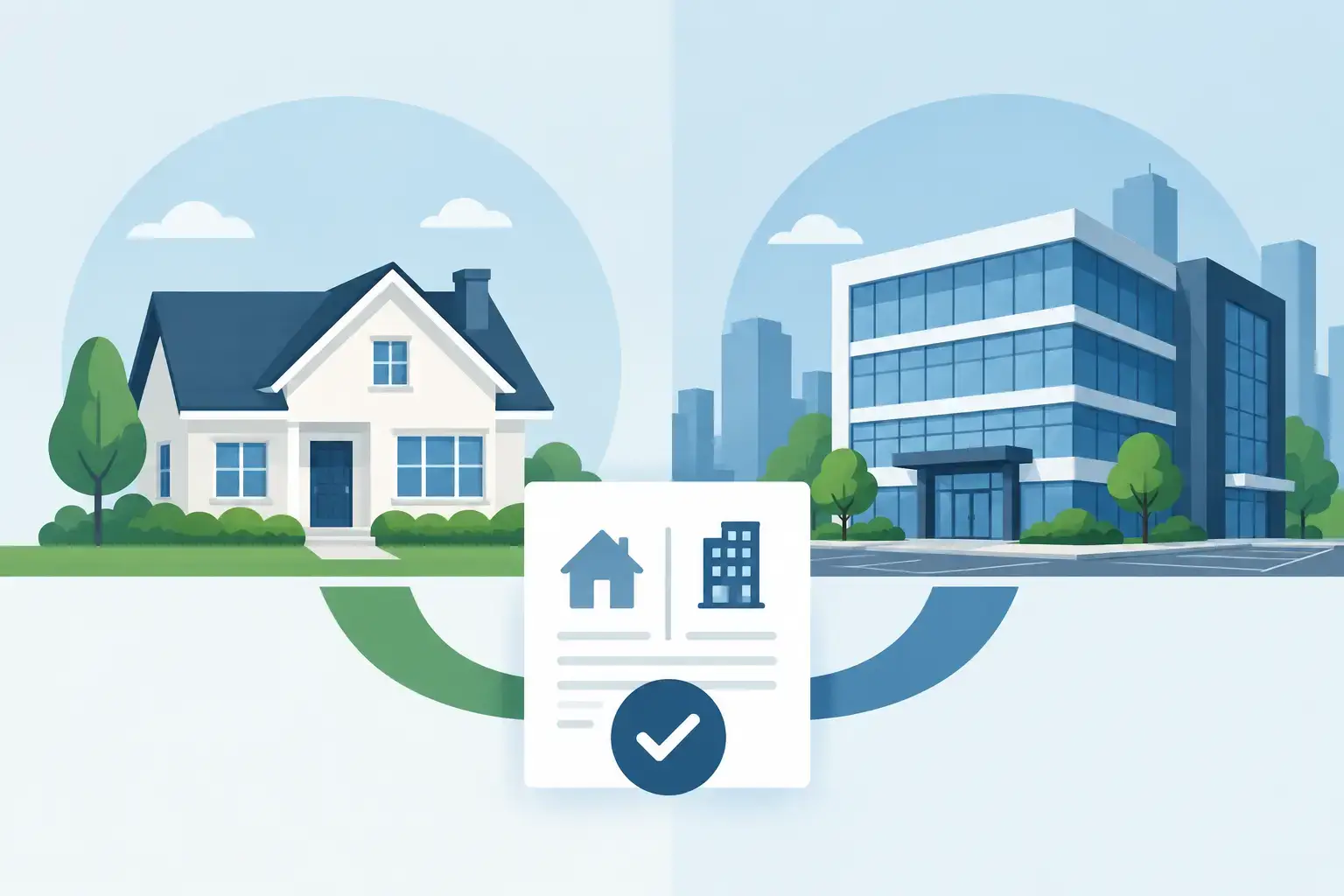
The clearest distinction is the purpose and lifespan of the expense. A commercial loan is usually designed for a known, longer-term investment. An overdraft is designed to bridge a short-term cash flow gap that will be cleared through ordinary trading receipts.
With a term loan, you receive a lump sum and make scheduled repayments. This creates discipline and allows the cost of a major asset or purchase to be spread over a period that reflects its useful life. You will pay interest on the full amount drawn, even if the funds sit unused after settlement, so the facility should be sized carefully.
With an overdraft, you can draw, repay and redraw within the approved limit. Interest is normally calculated on the daily outstanding balance, which can be efficient when the account returns to credit regularly. The risk is that a business begins relying on the overdraft every month to pay routine expenses. If it never reduces, it is no longer solving a timing issue – it may be masking a working-capital shortfall or a debt structure that needs review.
Security can also differ. Both facilities may be secured, particularly at larger limits, but a commercial loan is more commonly linked to a specific property or asset. An overdraft may be secured by property, business assets or a general security arrangement, and directors may be asked to provide personal guarantees. The exact position needs to be understood before signing, particularly where a family home is offered as security.
When a commercial loan is likely to suit
A commercial loan may be the better option when the business has a clear, one-off funding requirement and a realistic repayment horizon. Buying a premises, refinancing high-cost business debt, completing a renovation, funding a major fit-out or purchasing a business are common examples.
It can also suit a business seeking to consolidate several facilities into one manageable repayment. That does not mean consolidation automatically reduces the overall cost. Extending a debt over a longer term can lower monthly repayments while increasing total interest paid. The loan needs to be assessed against the business’s cash flow, security position and plans for the property or asset.
For commercial property purchases, lenders will also consider the property type, location, lease terms, tenant strength, valuation and loan-to-value ratio. Specialist lenders can be particularly relevant where a borrower has an unusual property, limited financial history, overseas income, recent credit impairment or a higher-LVR requirement that does not meet a major bank’s policy.
When a business overdraft is likely to suit
An overdraft can be appropriate where income is reliable but arrives after expenses fall due. A wholesaler with regular invoices paid in 30 to 60 days, for instance, may need temporary funding to buy stock and cover operating costs. The facility can be repaid as debtor payments land in the account.
It is often most useful when the limit is conservative and the business has a clear plan for clearing it. Review the account behaviour over several months. If the overdraft regularly returns to a positive balance, it is performing its intended role. If it remains fully drawn, the business may be better served by a term loan, invoice finance, asset finance or a broader refinance strategy.
Seasonality matters as well. A tourism operator, agricultural business or retailer may use an overdraft through a predictable quiet period and reduce it during peak trading. In that case, the lender will want evidence of historical turnover and the seasonal pattern, rather than a promise that sales will improve.
Questions to ask before choosing either facility
Start with the reason for the funds. Is this a purchase that will benefit the business for several years, or a gap between paying an expense and receiving income? Next, identify the repayment source. “Future cash flow” is not enough on its own – consider which invoices, contracts, sales or asset proceeds will reduce the debt, and when.
You should also compare the full cost, not just the advertised rate. Include establishment fees, annual fees, valuation and legal costs where relevant, break costs, default rates and the consequences of a lender review. Consider whether the facility is secured, which assets are at risk and whether you are giving a personal guarantee.
Finally, be realistic about documentation. A declined bank application does not necessarily mean the proposal is unsuitable. It may mean that the bank cannot use your income evidence, has a restrictive credit policy or is unwilling to accept the security. A specialist broker such as Finance Me can assess the purpose, security, financials and credit position before approaching lenders whose policies better suit the application.
Do not use short-term credit to solve a long-term problem
The most costly mistake is often using an overdraft because it is available, then allowing it to fund a permanent need. This can put pressure on daily operations and leave the business exposed if the limit is reviewed or reduced. Equally, taking a large term loan for a brief cash-flow gap can burden the business with repayments long after the gap has passed.
The right facility should give your business room to operate without creating a problem that is harder to refinance later. If your circumstances are complex, bring the full picture to the assessment – income evidence, BAS statements, existing debts, property security and any credit history. Clear information gives you a better chance of securing finance that supports the next stage of the business, rather than merely getting it through the next payment run.